Continue to product information
1 of 10

Biotic Kids

Biotic Kids

NEW

Standard price €24,99
Standard price Discount price €24,99
SALE! Sold out

1 porcija:

  • Free delivery over 100€
  • 2-5 day delivery throughout EU
  • Money-back guarantee

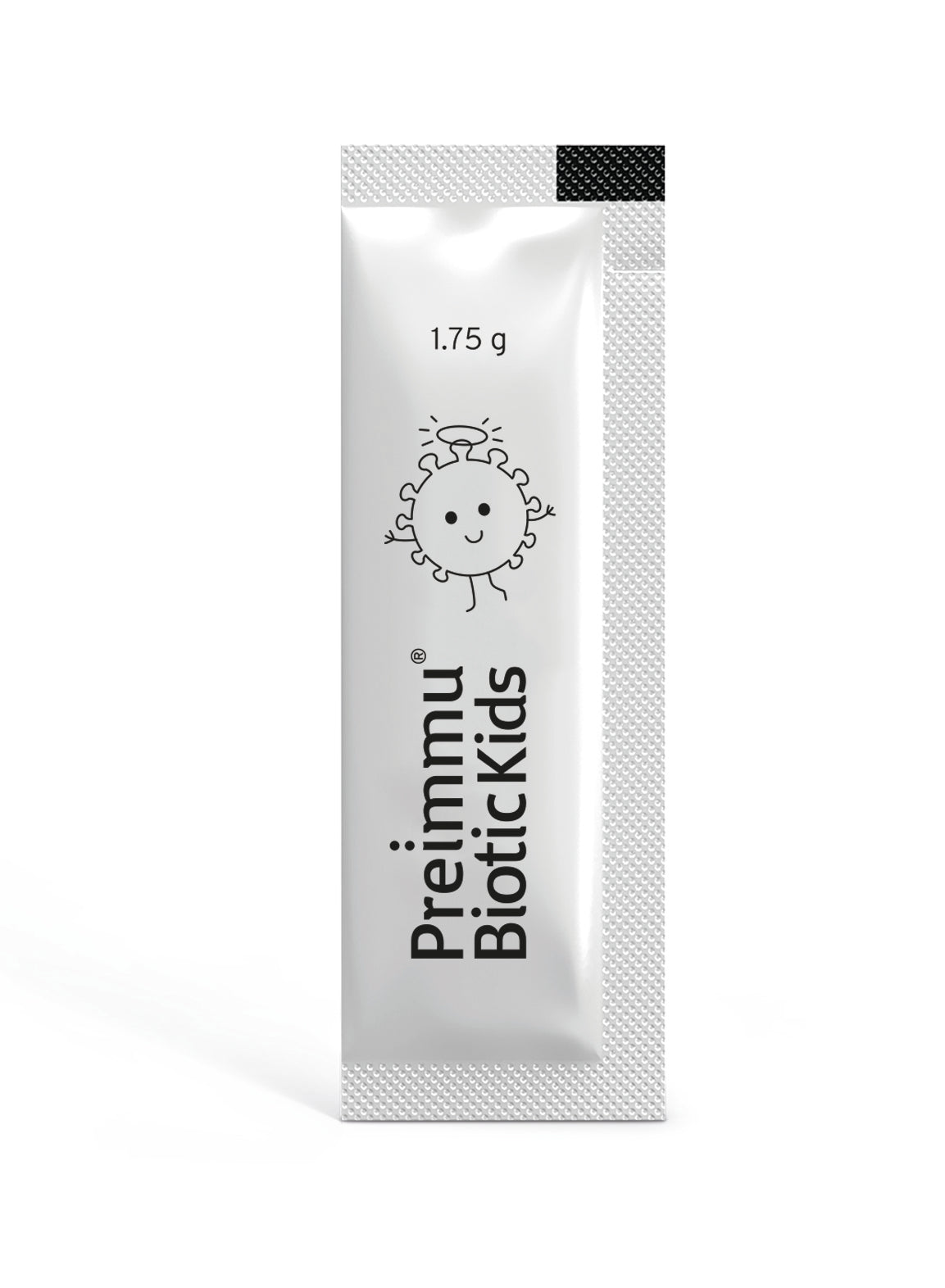
Preimmu® Biotic Kids (Registration No. 18575) Food supplement. Preimmu® Biotic is a source of water-soluble fibre**. The main ingredient of Preimmu® Biotic is galacto-oligosaccharide (GOS) powder, which is white with a neutral, mildly sweet taste. Preimmu® Biotic is intended as a source of fibre** in the diet and as a nutrient substrate for the beneficial gut microflora bacteria living in the human gastrointestinal tract – Lactobacillus spp. and Bifidobacterium spp. Made in Latvia.

Ingredients

Powder containing galacto-oligosaccharides (GOS) (fibre (galacto-oligosaccharides (from milk)), lactose (from milk), galactose (from milk), glucose (from milk)).

Content of active substances:

  • 1 sachet (1.75 g) contains: 1.225 g galacto-oligosaccharides (GOS).
  • 2 sachets (3.5 g) contain: 2.45 g galacto-oligosaccharides (GOS).
  • 3 sachets (5.25 g) contain: 3.675 g galacto-oligosaccharides (GOS).

How to use?

Recommended daily dose:

  • Children aged 1 to 2 years: 1 sachet per day.
  • Children aged 3 to 5 years: up to 2 sachets per day.
  • Children aged 6 years and older: up to 3 sachets per day.

Method of use: For oral use. Add the contents of the sachet to a drink (e.g. water, kefir, tea) or food (e.g. porridge, purée, soup) and stir. The product is heat-stable and is also suitable for use with hot drinks and foods. It is recommended to take it before, during or shortly after a meal.

Restrictions on use: Not suitable for children with primary lactose intolerance. Consultation with a doctor or nutritionist is recommended before use.

Warnings:

  • Do not exceed the recommended daily dose.
  • Do not use the food supplement as a substitute for a complete and balanced diet.
  • Keep out of the reach of children.

Storage: Store in a dry place at room temperature (up to 25 °C), in the tightly closed original packaging.

Delivery

in Latvia

Free delivery on DPD parcel orders over €60!
Delivery time: 2-5 working days

Baltics

Free delivery for on DPD parcel orders over €60!
Delivery time: 2-5 working days

in Europe

Free delivery for on DPD parcel orders over €100!
Delivery time: 2-14 working days*

Elsewhere in the world

Free delivery for orders over €100!*
Delivery time: 2-30 days*

  • The delivery time depends on the chosen supplier. You will find out more precise information in the order processing step.
  • Free delivery depends on your selected country
Fast and safe delivery is ensured by:
View full product information

What is the microbiome?

Your gut is home to trillions of microorganisms - bacteria, fungi and other microbes that together make up your gut microbiota. This system is about far more than digestion: around 70% of immune cells are located in the gut, and up to 90% of the body's serotonin is produced there. The microbiome is also involved in appetite regulation and in communication with the brain through the so-called gut–brain axis, so its balance affects much more than it might first appear.

Why GOS specifically?

GOS, or galacto-oligosaccharides, is a water-soluble fibre that isn't digested in the stomach or small intestine - it reaches the colon intact. There, GOS acts selectively: it feeds beneficial bacteria in particular, especially bifidobacteria and *Lactobacillus* species, allowing them to multiply and strengthen their place in the microbiome. It's a targeted fibre, not a generic additive - it "feeds" exactly the microorganisms that benefit your health.

What do prebiotics actually do?

Probiotics are live bacteria, while prebiotics are their food. They are indigestible fibres that don't try to add "foreign" bacteria to the body, but instead nourish your own existing microbiota, helping it renew and strengthen naturally. Prebiotics also influence the production of short-chain fatty acids in the gut - a process closely linked to the health of the gut lining and metabolism.

What does the research show?

In recent years the gut microbiome has become one of the most studied areas in nutrition science and medicine - with thousands of clinical trials and scientific publications confirming its role in immunity, appetite regulation and overall well-being. Below are some of the key findings.

Research

4000+

clinical trials

1000+

scientific publications

  • GOS selectively feeds bifidobacteria
  • The microbiome influences the gut–brain axis
  • 70% of immune cells are located in the gut
  • 90% of the body's serotonin is produced in the gut
  • The microbiome influences appetite regulation
  • The microbiome influences short-chain fatty acid production